
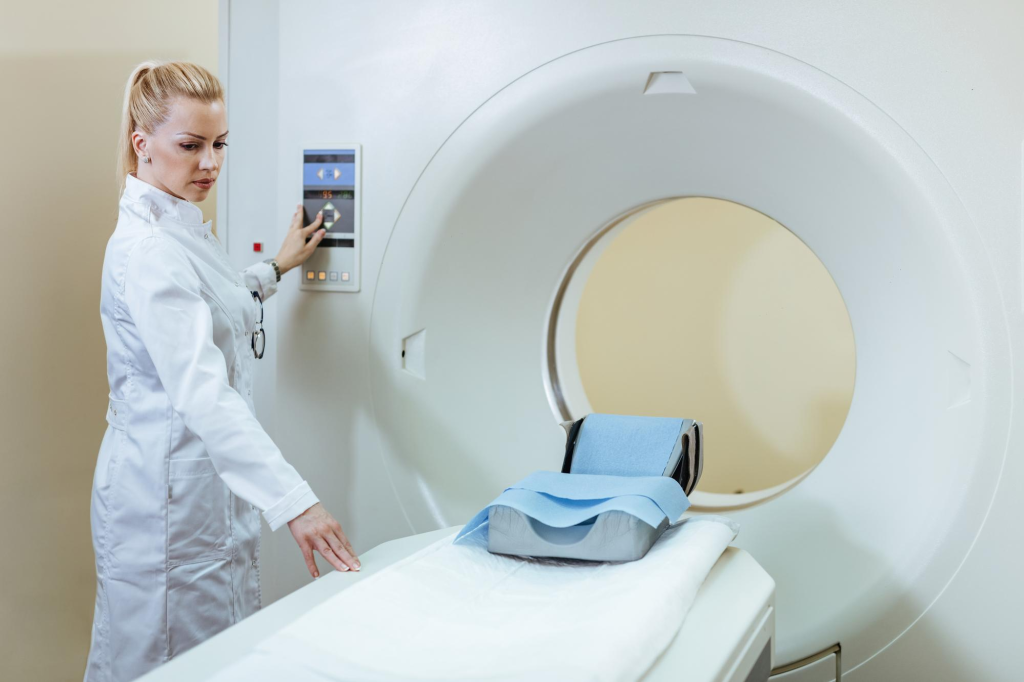
A CT scanner is a medical imaging machine that uses X-ray measurements taken from many different angles around the body to create cross-sectional 3D images of bones and soft tissues. The machine uses a motorized X-ray source that rotates around the patient inside a ring-shaped gantry – while sensitive detectors measure the X-rays passing through the body.
Now, these machines require massive amounts of high-voltage electrical power. A stable voltage supply is critical for running this machine, as it not only protects sensitive electronics but also prevents image artifacts of all kinds.
In today’s article, we’ll discuss different types of power protection methods commonly used to keep CT scanners stable. Let’s get started.
Uninterruptible Power Supply
So, a medical-grade UPS is usually considered the primary power protection for CT scanner. It keeps converting incoming AC power to DC, then back to stabilized AC. This conversion isolates the scanner from utility power issues. Even during a blackout, it will provide immediate battery backup. This prevents the sudden shutdowns that can ruin the sensitive X-ray tube.
And because CT scanners demand large, brief energy surges during rotor accelerations, the UPS system must be oversized to handle massive current without ever dropping voltage.
Isolation Transformers
A medical isolation transformer uses electromagnetic induction to separate the scanner’s electrical circuits from the main utility line. This separation eliminates the noise and harmonics generated by other heavy equipment in the facility. It also breaks ground loops to reduce leakage current and meet patient safety standards.
The transformers ensure a clean electrical ground, which prevents background interference from showing lines or distortion into the final diagnostic images.
Automatic Voltage Regulators
An automatic voltage regulator, also called a power conditioner, stabilizes against constant voltage sags and swells.
Due to high local demand, utility grids fluctuate widely. This can cause the scanner’s data acquisition system to malfunction. The AVR uses electronic switching to constantly correct these fluctuations. It also maintains a tight, stable output-voltage tolerance. This tight regulation protects the internal power supply from premature wear and ensures that X-ray beam quality remains intact during long scanning periods.
Surge Protective Devices
A surge protective device acts as a lightning rod for high-energy electrical transients. As discussed above, sudden voltage spikes due to utility grid switching or lightning strikes can damage a CT scanner’s delicate semiconductor components.
SPDs are installed at the main electrical panel and at the scanner’s power input to clamp these dangerous voltage spikes down to safe levels within nanoseconds. They divert the destructive excess energy into the ground before it reaches internal components.
Harmonic Mitigating Filters
A harmonic-mitigating filter targets the current distortion introduced by non-linear loads.
CT scanners utilize complex variable-frequency drives and switch-mode power supplies that convert the smooth sinusoidal waveform of standard electricity. The high-frequency harmonic currents are produced during this conversion. If left unchecked, harmonics can overheat the transformers and trip circuit breakers prematurely.
These specialized filters actively cancel out harmonic distortion. They restore a clean sine wave to protect the internal imaging logic circuits.