
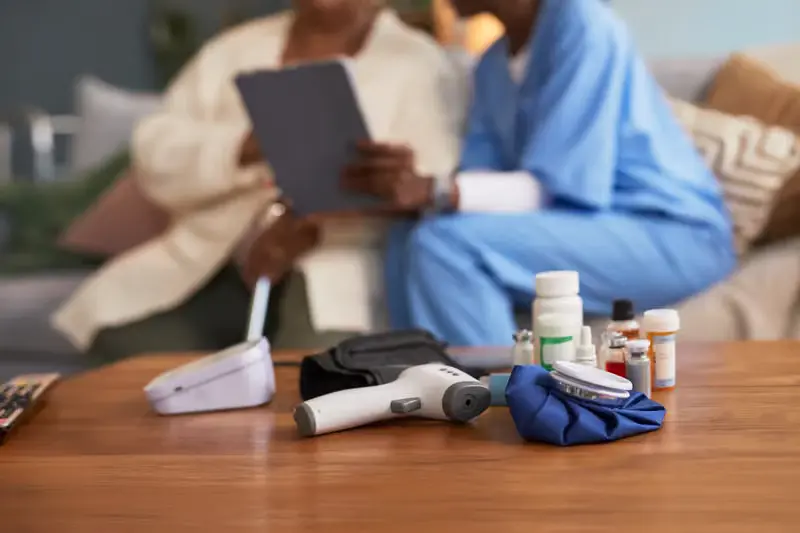
The biggest story in home health news in home care right now is not a device or a drug. It is a shift in where serious medical treatment happens. Care that once required a hospital bed increasingly arrives at a kitchen table, a living room recliner, or a bedroom with a home oxygen concentrator humming in the corner.
That shift has been building for a decade. What changed recently is the scale. Hospital at home programs moved from pilot studies at a handful of academic centres into mainstream reimbursement, remote monitoring equipment dropped in price, and families began asking different questions than they asked five years ago. Not whether home care exists, but which version of it they qualify for.
This piece covers what is genuinely changing, what the evidence supports, where the system still struggles, and what families should understand before they sign anything. It is written for people making real decisions rather than for policy observers.
The Biggest Shift Happening in Home Based Care
For most of the last thirty years, home health meant nursing visits after a surgery or a chronic illness flare. A nurse arrived two or three times a week, checked vitals, changed a dressing, and left. Care was intermittent by design, and the patient carried most of the risk between visits.
That model is now being replaced in a specific set of cases. Patients who would previously have been admitted for pneumonia, heart failure, or a complicated urinary tract infection are increasingly treated at home with daily clinical contact, either in person or through video, plus continuous monitoring for the first several days. The clinical intensity is closer to a hospital floor than to traditional home health, and the staffing reflects that.
The practical difference for a family is enormous. Someone stays in their own bed, sleeps better, moves more, and avoids the disorientation that hospital stays often produce in older adults. The trade is that a family member or caregiver becomes part of the care team whether they planned to or not.
Hospital at Home Programs and What Patients Actually Get
Hospital at home is the term most programs use, and it is worth understanding what sits behind it. A patient meeting the criteria is admitted to a virtual ward. A physician or nurse practitioner takes responsibility for the case, visits happen at least once daily, and a nurse is reachable around the clock by phone or video.
Equipment arrives before or shortly after admission. That usually includes a cellular connected blood pressure cuff, a pulse oximeter, a scale, and sometimes an intravenous pump for antibiotics or fluids. Some programs install a tablet for video visits and a direct line to the clinical team.
The evidence behind this model is unusually strong for a change of this size. Multiple randomized trials and large observational studies have found comparable or lower rates of readmission and mortality for eligible patients treated at home compared with inpatient care, along with better patient reported experience and lower cost per episode. That combination is rare in health care, which is why payers have moved so quickly.
Which Conditions Qualify for Home Admission
Not every diagnosis fits. Programs generally accept conditions that need monitoring and intravenous therapy but not surgery, imaging on demand, or intensive care capability. Heart failure exacerbations, chronic obstructive pulmonary disease flares, cellulitis requiring IV antibiotics, uncomplicated pneumonia, and some urinary tract infections appear most often on eligibility lists.
Exclusion criteria matter just as much. Unstable vital signs, active bleeding, altered mental status, and the need for urgent imaging usually rule out home admission. So does an unsafe home environment. A patient living alone without a working phone or a reliable caregiver is rarely accepted, regardless of how medically suitable the diagnosis is.
What Daily Monitoring Looks Like
A typical day involves a morning check with a nurse, either in person or by video, plus vital signs collected two to four times depending on the condition. Weight is tracked daily for heart failure patients because a rapid gain signals fluid retention before symptoms worsen.
Physicians review the data every day and adjust treatment remotely or in person. Escalation pathways are preplanned rather than improvised. If a trigger threshold is crossed, the patient is either visited within the hour or transferred to hospital, and that transfer decision is written into the care plan from day one.
Most admissions under this model last between three and seven days. After that, the patient either returns to ordinary home health or is discharged with a follow up appointment already scheduled.
Remote Monitoring Technology That Earned Its Place
Remote patient monitoring has been marketed heavily for years, and much of the early enthusiasm outran home health news in home care results. The picture has settled into something more useful. Monitoring works well when it is tied to a specific clinical decision, and it produces noise when it is not.
Connected blood pressure cuffs and pulse oximeters are now standard because the data feeds directly into treatment changes. A rising resting heart rate or a falling oxygen saturation triggers a call, and that call prevents an emergency department trip. The technology is not impressive. The clinical response to it is what saves money and hospital visits.
Fall Detection and Wearable Devices
Falls remain the leading cause of injury related hospitalization among older adults, and the home is where most of them happen. Wearable fall detection has improved considerably from the early pendant alarms that required a conscious press of a button.
Modern devices use accelerometers to detect impact patterns and can place an automatic alert to a monitoring centre or a family member without the wearer doing anything. Some newer systems add radar based room sensors that detect a fall without requiring any device to be worn at all, which solves the biggest weakness of wearables, namely that people take them off.
The limitation is false alarms. A device that triggers a call centre every time someone sits down heavily gets abandoned within weeks. Ask about the false alert rate before choosing a system, because reliability in the first month decides whether it is still being worn in the third.
Medication Reminders and Adherence Tracking
Medication problems drive a large share of avoidable hospital admissions. Patients forget doses, double up, or stop a medication early because they feel better. Electronic pill dispensers and reminder apps address part of this, and connected inhalers and injectable devices can now report whether a dose was actually taken.
The honest note here is that adherence tools work better when a human is reviewing the data. A dashboard nobody reads changes nothing. Programs that pair monitoring with a pharmacist review show the largest reductions in medication related readmissions.
The Workforce Problem Nobody Can Ignore
Home health news in home care reporting keeps returning to the same constraint. There are not enough clinicians willing to do the work, and the shortage is not evenly distributed.
Travel time is the structural issue. A hospital nurse treats patients down a corridor. A home health nurse drives between them, sometimes forty minutes each way, and that time is unpaid or poorly reimbursed. Rural areas suffer first, and some agencies have stopped accepting patients in entire counties because they cannot staff the visits.
Wages have risen and sign on bonuses are common, yet turnover stays high. The job is autonomous and meaningful, and it is also isolating, physically demanding, and administratively heavy. Documentation requirements consume hours that clinicians would rather spend with patients.
Families feel this directly. Fewer available clinicians means longer waits for an assessment, less flexibility in visit timing, and more responsibility landing on unpaid family caregivers who never trained for it.
Reimbursement Changes Shaping Who Gets Care
Payment rules decide what care actually reaches a home, and they have changed meaningfully in recent years. Value based purchasing now ties a portion of home health agency payments to outcomes rather than to the number of visits delivered. That has pushed agencies toward measuring things that matter to patients, including whether someone can bathe and dress independently after a course of care.
The practical effect is a quieter one. Some agencies now decline patients they judge unlikely to improve, because a poor outcome score affects their payment across the whole patient population. That is a rational response to the incentive and a real problem for families with a relative whose condition is stable rather than improving.
Medicare Advantage plans have expanded home based benefits as well, covering things traditional Medicare does not, such as in home safety assessments and limited caregiver support hours. Coverage varies by plan and by county, which is why the single most useful thing a family can do is read the specific plan document rather than a general summary.
Wellness Updates for Family Caregivers
Unpaid family caregivers carry an estimated share of long term care that would cost hundreds of billions of dollars annually if it were purchased. They also experience higher rates of depression, sleep disruption, and physical injury than the general population, and most receive no training at all before the first shift.
Programs that teach specific physical techniques produce measurable results. Learning to transfer a person from bed to chair using correct body mechanics reduces caregiver back injuries significantly, and it takes an afternoon to learn. Many hospitals and area agencies on aging offer these sessions free of charge.
Respite care remains underused. Short term relief, whether for a few hours or a few days, prevents the burnout that ends home care arrangements prematurely. Families who plan for respite before they need it keep their relatives at home longer than families who wait until crisis.
Health monitoring for the caregiver deserves the same attention as monitoring for the patient. Blood pressure, sleep quality, and mood are worth tracking. A caregiver who collapses removes the entire support structure in a single event.
Safety and Infection Control at Home
Home based clinical care brings hospital grade requirements into a setting never designed for them. Infection control in a house means managing sharps disposal, cleaning surfaces around intravenous lines, and separating clean supplies from contaminated ones without a dedicated utility room.
Agencies are required to provide training and equipment, and the quality of that training varies. Ask specifically how sharps are disposed of, who handles soiled dressings, and what happens when a line site looks red or feels warm. Those questions reveal whether the program is rigorous.
Home hazards deserve a walkthrough before any clinical care begins. Loose rugs, poor lighting on stairs, and bathroom fixtures without grab bars cause more harm than most medical complications in this population. Many programs now include an occupational therapy assessment that addresses exactly this, and it is worth requesting even when it is not offered automatically.
What the Next Two Years Likely Bring
Expect hospital at home eligibility to widen as more health systems build the logistics capability to run it. Growth will be uneven, concentrated where staffing exists and where payers have already agreed to pay.
Expect monitoring to become more passive and less dependent on patient cooperation, with room sensors and ambient systems replacing some wearable functions. Expect also more scrutiny. Regulators are watching quality metrics closely, and a high profile failure would slow adoption considerably.
For families, the practical advice is unchanged by any of this. Ask what specific services are covered, who to call at two in the morning, what training is provided, and how the plan changes if the patient does not improve. Home care works best when everyone involved understands the plan before the first difficult night arrives.
Conclusion
The direction of home health news in home care is clear. Serious treatment is moving into homes, monitoring is becoming continuous rather than occasional, and unpaid family caregivers are absorbing more of the load whether they planned to or not.
The opportunities are real and the evidence supports them. So are the constraints, particularly staffing and the uneven way payment rules shape who receives care. Families who ask precise questions and plan for respite early navigate this system far better than families who assume the hospital will handle everything.
Understand what you qualify for, who is responsible for each part of the plan, and what happens when something goes wrong at night. That preparation is what turns home care from a hopeful arrangement into a workable one.
FAQs
1. Is hospital at home care as safe as being treated in a hospital?
For carefully selected patients, research consistently shows comparable or better outcomes than inpatient care, including readmission and mortality rates. The safety depends heavily on proper screening and on having a reliable caregiver and a working phone in the home. Patients who do not meet those criteria should stay inpatient.
2. What conditions can be treated at home instead of in hospital?
Common examples include heart failure flare ups, chronic lung disease exacerbations, cellulitis needing intravenous antibiotics, uncomplicated pneumonia, and some urinary tract infections. Conditions requiring surgery, urgent imaging, or intensive monitoring are generally excluded. Each program publishes its own eligibility criteria.
3. Who pays for remote monitoring equipment in the home?
Coverage depends on the payer. Traditional Medicare covers remote patient monitoring when specific documentation requirements are met, and many Medicare Advantage plans include it as an added benefit. Medicaid coverage varies by state. Always confirm what your specific plan covers before equipment is installed.
4. How can family caregivers avoid burnout during long term home care?
Plan respite before you need it rather than during a crisis. Learn proper transfer and lifting technique to protect your own body, and track your own sleep and blood pressure. Contact your local area agency on aging to find free training sessions and respite funding that most families never ask about.
5. What should I ask before agreeing to a home health program?
Ask who to contact at night, what training and equipment are provided, how sharps and soiled dressings are handled, and what happens if the patient does not improve. Also confirm which services the plan actually pays for, because coverage varies widely between Medicare, Medicare Advantage, and state Medicaid programs.